Why Creativity Builds Strong Communities (and What It Looks Like in Real Life)
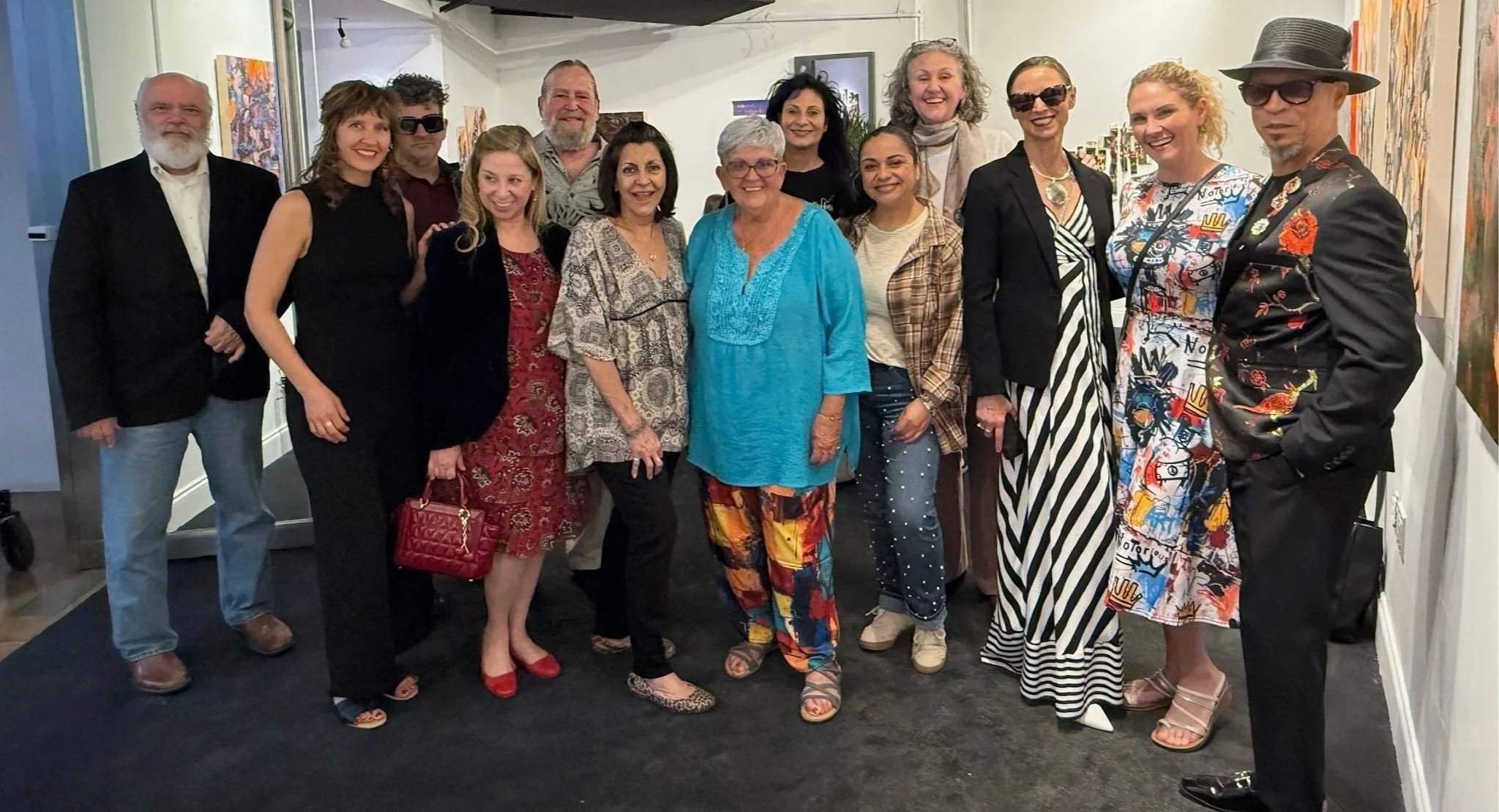
Opening night energy with March 2025 Artist in Residence Rebecca White. (2nd left in black)
Creativity is one of those words that can sound soft—until you look at what it actually does.
When people make something together (a collage postcard, a painting, a conversation sparked by an artwork), they’re not just “doing art.” They’re practicing the skills a strong community needs: showing up, listening, sharing space, and building trust over time.
At collaboARTive, we see this every week. We’ve hosted 171+ consecutive Noche de Arte events since March 2022 with zero cancellations, welcoming locals, visitors, and hotel guests into a space where art becomes a reason to connect. In 2024–25 alone, Noche de Arte reached 4,958 attendees and generated an estimated $140,276 in economic impact (10.7x ROI)—but the deeper impact is harder to measure: people leaving feeling more connected than when they arrived.
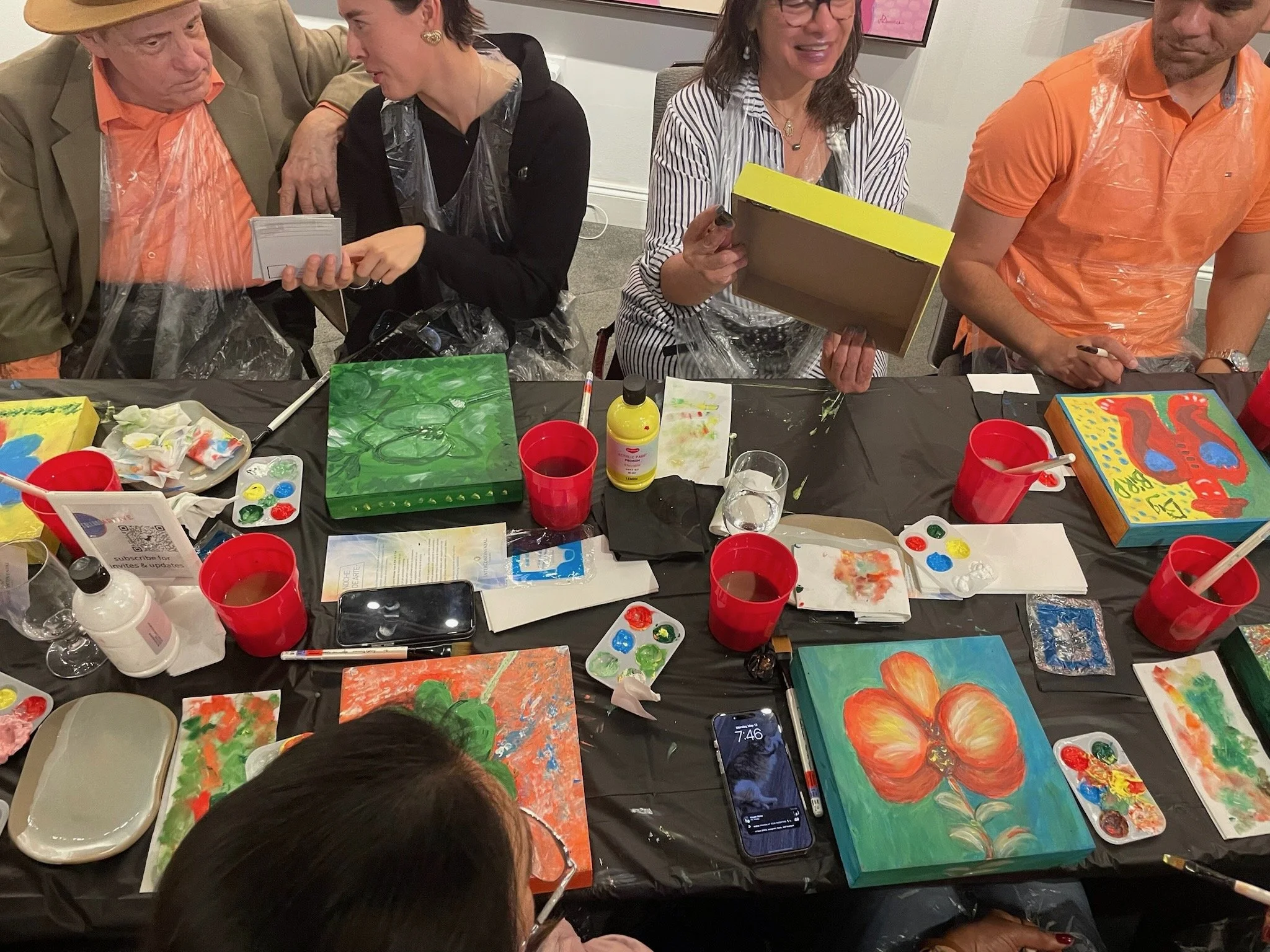
Free Noche de Arte Workshop with Annick Duvivier, Artist in Residence, May 2025.
Creativity is community infrastructure, not a luxury
Here’s the simplest way I can put it: creativity is how communities rehearse belonging.
It’s also increasingly recognized as part of health and wellbeing—not just personal enrichment. The World Health Organization reviewed thousands of studies on arts and health and concluded:
“The evidence is clear; art plays a major role in improving health and well-being.”
That doesn’t mean art replaces healthcare or policy. It means the arts are one of the practical tools communities can use to support wellbeing—especially when access is consistent and welcoming.
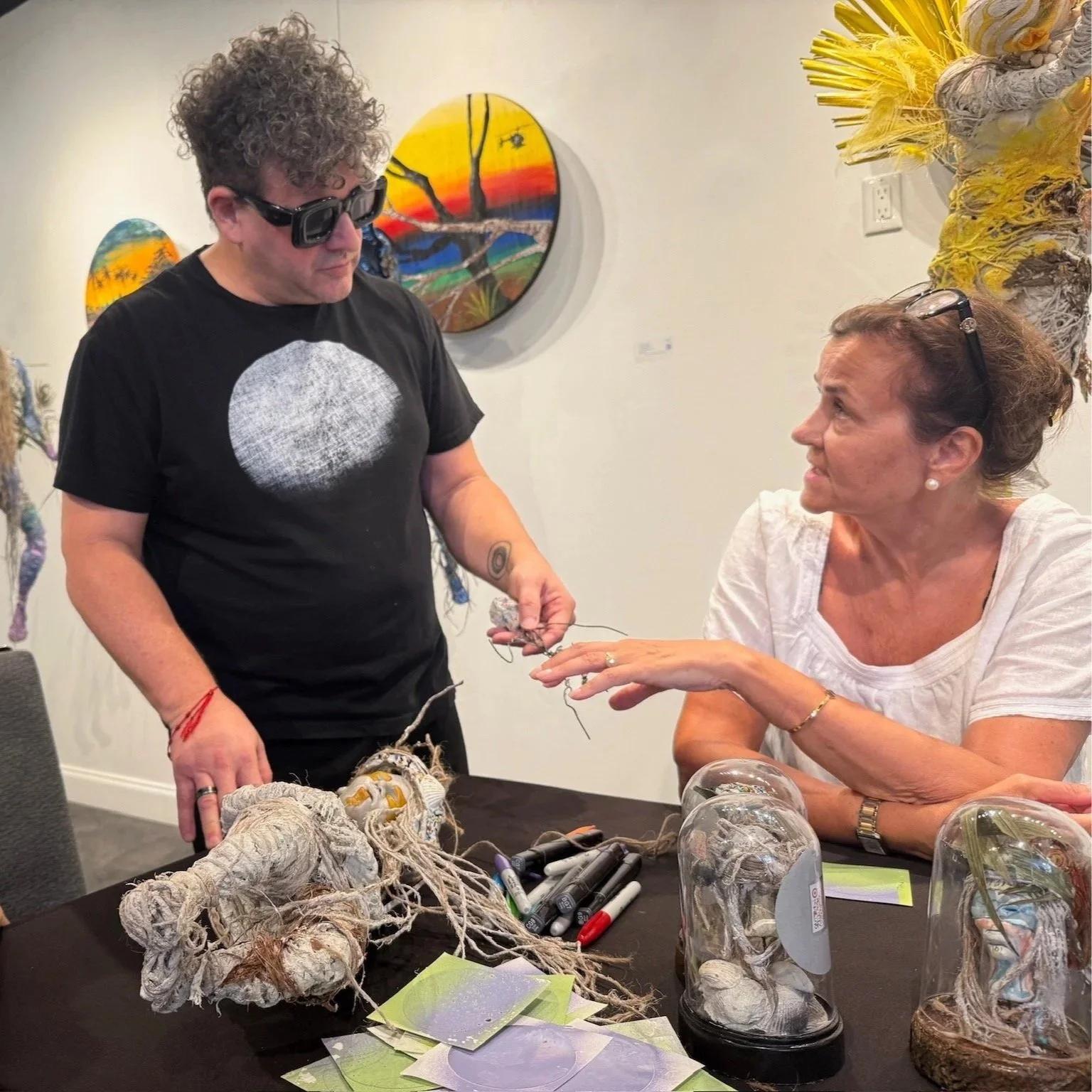
August 2025 Artist in Residence Danny Ramirez in conversation about his work with visitor.
Social connection is a public health issue (and community spaces are part of the solution)
One reason this matters so much right now: loneliness and isolation aren’t fringe problems.
In the U.S. Surgeon General’s advisory on social connection, Dr. Vivek Murthy writes:
“Loneliness is far more than just a bad feeling—it harms both individual and societal health.”
When I read that, I think about how many people come to a community art night not because they’re “art people,” but because they’re looking for a place where it’s normal to talk to someone new. Art gives us a low-pressure reason to be together.
Social capital: the invisible resource that helps artists (and communities) thrive
There’s another concept that helps explain what’s happening in rooms like ours: social capital. Political scientist Robert Putnam defines social capital as:
“the connections among individuals—social networks and the norms of reciprocity and trustworthiness that arise from them.”
For artists, social capital can be the difference between surviving and thriving:
a recommendation that leads to an opportunity
a peer who shares a resource
a curator who remembers your work
a supporter who becomes a recurring donor
And for communities, social capital is what makes neighborhoods more resilient—because people who know each other are more likely to help each other.
What this looks like in real life at collaboARTive
We build social capital through consistent, accessible creative experiences:
Noche de Arte (weekly Mondays, free and open to all)
Creative Community Nights designed to reduce isolation and spark real conversation
Collage and Connect (“no rules, no judgement, just creative play”) with participants from 15+ countries
Studio to Success professional development workshops that help artists build sustainable careers
This work is deeply local (Miami-Dade and Broward counties primarily), but it’s also part of a bigger story: people everywhere are hungry for connection, meaning, and places that feel human.
Why donations matter (especially in Miami)
A lot of people assume community arts “just happen.” In reality, they take labor, planning, supplies, coordination, and partnerships.
And in Miami, maintaining affordability and access is not automatic. Costs rise. Space is expensive. The work of keeping doors open—week after week—requires real support.
Your donation helps us:
keep community programs free or low-cost
pay artists and support their growth
provide materials for hands-on creative play
sustain consistent programming (the consistency is the magic)
If you believe creativity makes communities stronger, I’m asking you to help us keep this work going. Donate to collaboARTive to support community-based arts experiences that build connection, belonging, and real opportunity for artists. If you can, consider making it monthly—recurring support is what protects consistency.
Sources
• World Health Organization (WHO) – “What is the evidence on the role of the arts in improving health and well-being? A scoping review” (Fancourt & Finn, 2019): https://www.who.int/europe/publications/i/item/9789289054553
• WHO scoping review PDF (hosted by National Centre for Creative Health): https://ncch.org.uk/uploads/WHO-Scoping-Review-Arts-and-Health.pdf
• U.S. Department of Health & Human Services – U.S. Surgeon General Advisory “Our Epidemic of Loneliness and Isolation” (2023): https://www.hhs.gov/sites/default/files/surgeon-general-social-connection-advisory.pdf
• Robert D. Putnam – “Social Capital Primer” (Bowling Alone resources): http://robertdputnam.com/bowling-alone/social-capital-primer/